
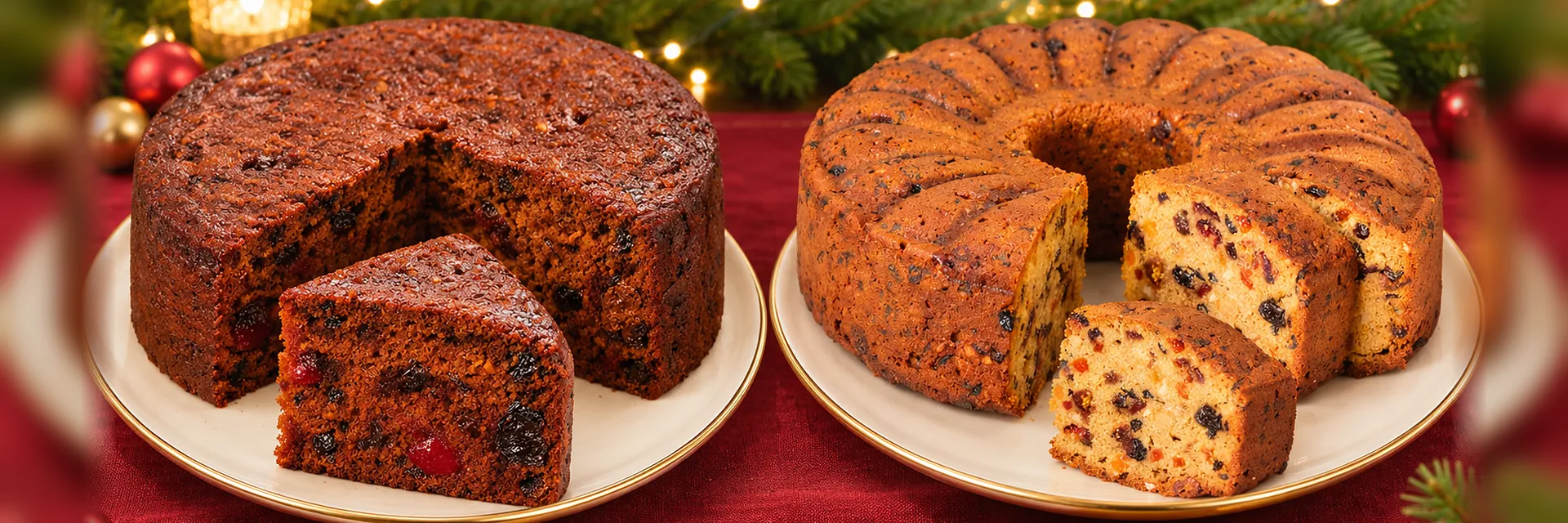
If you are asking “fruit cake vs plum cake, which one to buy for Christmas?”, you are not alone. A plum cake is a type of fruit cake, but it is richer, darker, more heavily spiced, and built around matured dried fruit. The two terms overlap in Indian bakeries, especially in Kerala, but the differences in spice intensity, maturation depth, and crumb colour are real, and they matter when you are choosing a Christmas cake. Many Trivandrum families find themselves weighing exactly this question at bakery counters every December. As a bakery from the House of Azad since 1940, we have been part of that conversation for decades. We currently offer three distinct plum cakes, each built for a different palate, and this guide will help you find yours.
Whether you are buying for the Christmas table, gifting to a colleague, or visiting family in Kowdiar or Kumarapuram, knowing the difference between fruit cake and plum cake saves you from guessing. The choice is simpler than it looks once you understand what each one actually delivers.
Key takeaways
- Plum cake is fruit cake: Plum cake sits within the fruit cake family but has specific expectations around spice weight, dark colour, and matured dried fruit.
- No actual plums: The word “plum” historically meant dried fruit in older English, so a plum cake contains raisins, sultanas, and currants, not fresh plums.
- Maturation is the key difference: Plum cakes are defined by slow-soaked fruit; lighter fruit cakes may skip this stage entirely.
- Alcohol-free is not lesser: Juice-matured plum cakes carry genuine depth and spice complexity; the flavour character is different, not inferior.
- Three distinct choices: Bread Factory’s Matured, Golden Butter, and Rich Plum Cakes serve three different palates, all made with real butter and no preservatives.
Are plum cake and fruit cake actually the same thing?
They are related, but not identical. Plum cake is a specific style within the broader fruit cake family. In Kerala, the two terms are often used interchangeably across bakery menus and festival conversations, which is where the confusion begins. Understanding the distinction starts with the word “plum” itself, and once you do, the fruit cake vs plum cake question becomes much easier to answer.
Why “plum cake” contains no plums
In older English, “plum” was a general term for any dried fruit, not specifically the fresh stone fruit we know today. When the name “plum cake” was coined, it simply described a cake filled with dried fruits: raisins, currants, sultanas, dates, figs, and candied peel. The name stayed long after the original meaning faded. Fresh plums were never part of the recipe, and their high water content would make any attempt at adding them a baking problem rather than a flavour upgrade.
How the terms are used in Kerala bakeries
In Trivandrum, by local bakery convention, “plum cake” typically signals a dark, spiced, festival-style cake with matured dried fruit at its core. “Fruit cake,” on the other hand, may refer to a lighter, cream-topped or sponge-based cake with candied or fresh fruit. The distinction is partly a matter of local bakery convention and partly one of recipe. If you walk into a bakery and ask for a fruit cake, you may receive something far lighter and sweeter than the dark, aromatic slice you were imagining. Asking for a plum cake sets clearer expectations.
Fruit cake vs plum cake: taste, texture and spice compared
The clearest way to understand the fruit cake vs plum cake difference is through direct comparison. Here is how the two styles sit against each other on the qualities that matter most when you are choosing a Christmas cake
| Aspect | Plum Cake | Lighter Fruit Cake |
|---|---|---|
| Taste | Dark, caramel-kissed, deeply fruited and complex | Sweet, fruit-forward, mild and straightforward |
| Texture | Dense, moist, firm when sliced | Softer crumb, lighter and more cake-like |
| Spice | Cinnamon, cloves, nutmeg and cardamom | Restrained or absent, depending on style |
| Colour | Dark brown from caramel syrup and dense fruit | Pale golden to light brown |
Spice intensity: bold versus restrained
Kerala-style plum cakes use a full warm spice blend, often anchored by cardamom alongside cinnamon, cloves, and nutmeg. This is not background spice; it is the personality of the cake. A lighter fruit cake, particularly one topped with fresh cream or featuring softer candied fruit, may carry little spice at all, letting the sweetness of the fruit lead instead.
Colour and crumb: dark versus golden
The characteristic darkness of a Kerala plum cake comes from caramel syrup and the depth of the dried fruit, not from cocoa or artificial colouring. The caramel also adds a slight, pleasant bitterness that balances the sweetness of the fruit. A golden fruit cake or butter-based plum cake achieves its lighter look through controlled spice use, brighter fruit selection, and a different approach to sweetening.
What “dense and moist” actually means in the slice
A good plum cake holds its shape cleanly when cut, feels moist without being wet, and shows visible flecks of fruit throughout the crumb. It does not crumble, and it does not feel heavy in an unpleasant way. A lighter fruit cake has a softer, more open crumb, closer to a celebration sponge than to a dense, festival-style loaf. Both are enjoyable; they simply satisfy different cravings.
Why maturation is the real difference between a good plum cake and a good fruit cake
Maturation is what separates a plum cake from a simple fruit cake, and it is the step that creates the depth you taste in every good slice. The process involves soaking or slow-steeping dried fruits in liquid before baking, allowing the fruit to absorb flavour, soften, and develop a richness that cannot be achieved by simply mixing fruit into a batter. Lighter fruit cakes may skip this stage entirely, which is why they taste fresher and simpler.
How soaking transforms dried fruit
Fruit that is soaked over days or weeks absorbs liquid steadily, softens throughout, and releases its natural sugars into the mix. The result is a jammy, deeply flavoured fruit that bakes into the crumb rather than sitting as a separate element within it. When you taste a well-matured plum cake, you are tasting the result of that patience: fruit that has become part of the cake rather than an addition to it.
Alcohol versus fruit-juice maturation
Traditional plum cakes use rum or brandy for soaking; alcohol-free versions use real fruit juices, honey, and citrus zest. Both approaches work, and both produce genuinely matured fruit. Juice-matured cakes tend to be brighter and sweeter, while alcohol-matured cakes carry warmth and complexity from the spirit itself. For families in Trivandrum who want a cake that everyone at the table can share, including children and those who avoid alcohol, juice maturation is the practical and responsible choice. At Bread Factory, all three of our plum cakes are matured without alcohol, using selected fruits, real fruit juices, honey, and citrus zest.
Which to buy this Christmas: fruit cake or plum cake?
Once you understand the differences, the buying decision becomes straightforward. The choice depends on three things: the palate you are serving, the occasion you are buying for, and practical considerations around shelf life and dietary preferences.
Gifting versus sharing at home
For gifting, a well-packaged plum cake with a firmer crumb and lower moisture travels better and presents more cleanly than a cream-topped fruit cake. It is also less temperature-sensitive during transit, which matters in Trivandrum’s warm, humid weather. For home sharing at Christmas dinner, freshness matters more than longevity. Buy it close to the day, keep it wrapped, and bring it out at room temperature for the best texture.
The humidity in Kerala shortens storage time considerably compared to drier climates, so plan your purchase date accordingly.
Is alcohol-free plum cake a lesser option?
No. A well-matured, juice-soaked plum cake carries genuine depth, real spice complexity, and the same moist, fruit-dense character as an alcohol-soaked version. The flavour character is different, not inferior. The brightness of orange juice or the sweetness of honey brings its own quality to the fruit, and the spice profile does not depend on alcohol to deliver. Many families in Kerala simply prefer an alcohol-free plum cake, and that preference is a choice, not a compromise.
Three plum cakes from Bread Factory, each built for a different palate
We bake three plum cakes at Bread Factory, and each one is a distinct flavour experience. All three are made with real butter, never margarine, using selected fruits matured with real fruit juices, honey, and citrus zest. No alcohol. No preservatives. Baked fresh. The difference between them is in the maturation approach, the spice balance, and the fruit density.
Matured Plum Cake: for the bold and the traditional
This is the classic Christmas plum cake that most families in Trivandrum grew up expecting. Slow-matured fruits, a full Kerala spice profile with cinnamon, cloves, nutmeg, and cardamom, and a dark, moist, deeply fruit-forward crumb. Rich, aromatic, and unapologetically intense. If you have a clear picture in your mind of what a plum cake should taste like, this one delivers it.
Golden Butter Plum Cake: for those who prefer brightness over depth
Controlled maturation, brighter fruit, delicate spicing, and a light golden crumb built on real butter. This is the plum cake for someone who finds the dark variety too heavy or too spiced. It sits closer to a premium butter cake with fruited character: clean, familiar, and satisfying without demanding much of the palate. It is an excellent choice for guests whose preferences you are not sure about, or for a table where the cake needs to appeal to a wide range of ages.
Rich Plum Cake: for the most committed fruit-cake lover
Double-matured, intensely dark, and deeply moist. The Rich Plum Cake is for anyone who reads the first two descriptions and thinks: I want more. The fruit density is higher, the colour is deeper, and the experience is the most indulgent of the three. The double maturation allows fruit juices to fully permeate the crumb, producing a softer, richer texture that is noticeably different from a single-matured cake. This is a cake for those who take their Christmas plum cake seriously.
Making your choice with confidence
Plum cake is not a vague synonym for fruit cake. It is a specific style defined by maturation, spice, and density. Once you understand those differences, the buying decision is easy: bold and dark, or golden and buttery, or maximum fruit intensity. Each is a legitimate choice, and each suits a different mood, occasion, or guest list.
So if the fruit cake vs plum cake question has been on your mind this Christmas, the answer lies in what you are looking for. At Bread Factory, we have developed three plum cakes to give Trivandrum families a real choice, not just a default. All three are made fresh, with no preservatives and no margarine, in the tradition of Thoughtful Baking that has defined our work from the House of Azad since 1940. This Christmas, whichever one you choose, you are choosing a cake made with care.
Browse the full Bread Factory range on the Bread Factory app, available on Google Play for Android and on the Apple App Store for iOS. Order fresh and have it delivered to your door within Bread Factory’s delivery areas across Trivandrum.
Download for Android on Google Play
Download for iOS on the Apple App Store