
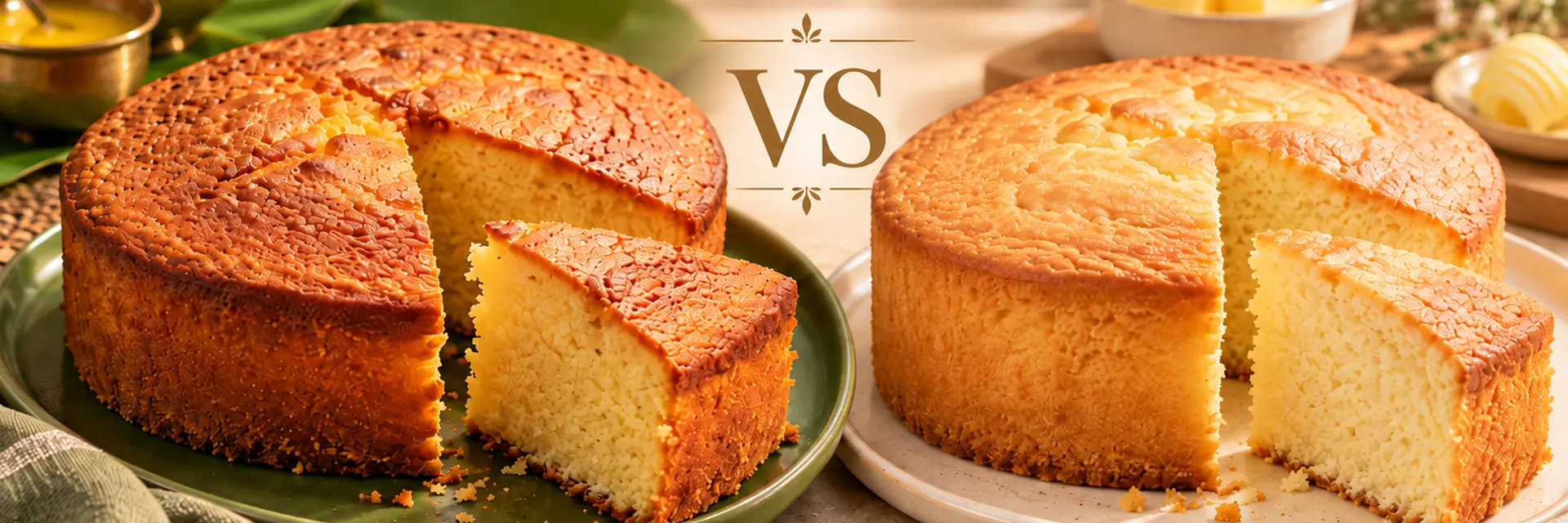
There is a particular smell that announces a ghee cake before you even open the box. Something warm, toasted, and unmistakably familiar, the kind of aroma that fills a Trivandrum kitchen and lingers long after the last slice is gone. Many cake lovers who pick one up for the first time find themselves wondering what makes an Indian ghee cake different from regular butter cake. The two may look similar on the outside, but in the mouth, they are entirely different experiences shaped by entirely different ingredients, beginning with the fat itself.
At Bread Factory in Trivandrum, the Indian ghee cake is made the traditional way, real ghee, fresh milk, and nothing substituted or cut short, as the bakery’s own baking philosophy states. That combination is not just an ingredient list. It is a deliberate baking choice that shapes everything from the crumb to the aftertaste.
What ghee and butter actually bring to a cake batter: fat, water, and aroma
Ghee and butter come from the same source: milk. But by the time they reach a cake batter, they are fundamentally different ingredients. Butter is an emulsion of roughly 80, 82% fat, around 15, 17% water, and a small amount of milk solids. Ghee is almost entirely fat, containing at least 99.5% milk fat, with barely any water and no milk solids remaining. Those compositional differences, in moisture, solids, and fat concentration, explain most of what sets the two cakes apart in texture, aroma, and shelf life.
The role of water in butter
Butter’s water content does real work inside the oven. As the cake bakes, that water turns to steam, pressing against the crumb structure and contributing to lift. It also helps keep the crumb from feeling too dense in the first minutes after baking. The milk solids in butter add a faint dairy sweetness and assist with browning. Together, these elements give a classic butter cake its familiar lightness, elasticity, and fresh, creamy character.
Why ghee behaves differently in the batter
Ghee contributes almost no water to the batter, which means the batter is richer and heavier from the start. The oven gets no steam from the fat, so the cake builds its structure through eggs, chemical leavening, and fresh milk instead. This is why traditional Indian ghee cake recipes include fresh milk as a deliberate ingredient, not an afterthought. It restores the moisture that ghee, by its nature, cannot provide. Without that balance, the result would be too dense, too dry, and too short to be enjoyable.
Ghee cake vs butter cake: texture, crumb, and the crumble test
Texture is where the difference between the two cakes is most immediately felt. A butter cake has bounce. A ghee cake has richness. Both are satisfying, but they are built for different eating experiences, and understanding the contrast helps you appreciate each one on its own terms.
Why ghee produces a tighter, more tender crumb
Without steam from water and without milk solids to contribute elasticity, a ghee cake sets into a closer, finer crumb. The concentrated fat coats flour particles and limits gluten development, which is precisely what creates that characteristic tenderness and density. Each bite feels full and satisfying rather than airy and springy. This is not a flaw in the bake; it is exactly what a well-made ghee cake is supposed to deliver. The crumb almost melts against the palate in a way that a lighter butter cake simply cannot replicate.
The “crumble” quality and what it tells you
High-fat, low-water cakes behave differently under pressure. A ghee cake, when you break off a piece, tends to crumble cleanly, almost like shortbread in how it gives way. Butter cake, with its water content and milk solids, has more elasticity and holds together with a slight spring. This crumble quality is generally a good indicator of real ghee at work in the batter, though technique factors such as whipped eggs, added liquids, and leavening also influence texture. If a cake claiming to be a ghee cake holds together with the pronounced bounce of a standard sponge, it is worth asking the baker to confirm the fat used rather than relying on texture alone.
What makes an Indian ghee cake different from regular butter cake: aroma and flavour
The most striking difference between the two cakes is not texture. It is aroma. The smell of a ghee cake fresh from the oven is something that stays in a room, in a memory, and in the mind of anyone who grew up eating one on a Kerala evening.
The nutty, toasted depth of clarified ghee
When ghee is made, the milk solids are deliberately browned before being removed. That browning creates volatile aroma compounds: pyrazines that give a roasted, nutty impression; furanones that add caramelised sweetness; and aldehydes and lactones that contribute warmth and depth. These compounds remain dissolved in the fat and reactivate when the ghee is heated again inside the oven. The result is a distinctly roasted, nutty aroma that is generally quite different from anything a butter cake produces, a character shaped by ghee’s unique flavour chemistry rather than the creamier, dairy-forward notes of butter.
How a ghee cake smells versus a butter cake
A butter cake smells creamy, milky, and familiar, the classic bakery smell that most people grew up with. A ghee cake smells deeper: toasted and nutty, with a warmth that belongs entirely to Indian kitchens rather than Western patisseries. That aroma is most vivid while the cake is still warm, but a trace of it lingers even after it has cooled completely.
Many Kerala families associate it instantly with celebration, hospitality, and home, because for generations, it has been present at all three. The flavour follows the same logic: butter gives a bright, dairy-forward character; ghee gives a richer base with a slightly roasted, lingering quality that stays with you after the last bite.
The cultural roots that make ghee cake a category of its own
Ghee cake is sometimes described as an Indian version of butter cake. That framing misses something important. Kerala’s ghee cake is best understood as a locally distinct tradition: it absorbed the form of European-style bakery cakes while transforming them entirely through a fat that carries centuries of meaning in Indian food culture. The result is not an imitation, it is something that belongs here.
Ghee as a food ingredient with deep Indian roots
Ghee has been central to Indian cooking, ritual, and daily life for a very long time. In Kerala, it appears in festival sweets, temple offerings, payasam, and everyday meals alike. Its association with richness, nourishment, and generosity is deeply embedded. Using ghee in a cake is not a workaround for when butter is unavailable. It is an intentional choice that connects a simple bake to a much older food tradition, and it is part of why an Indian ghee cake feels like it belongs here.
Why ghee cake is not just a butter cake with a swap
A butter cake recipe that simply replaces butter with ghee is not a ghee cake. A proper Indian ghee cake is built from the ground up around ghee’s qualities: its richness, its near-zero water content, its toasted aroma, and the short, tender texture it creates in a batter. The proportions of flour, sugar, eggs, and milk are calibrated specifically for ghee. The fresh milk in the recipe is there to compensate for what ghee does not bring. Kerala’s ghee cake belongs to a bakery tradition that absorbed outside influences while staying deeply rooted in local food values: rich dairy flavour, warm depth, and the kind of generosity that shows up in every slice.
What a well-made Indian ghee cake actually looks and tastes like
Knowing the difference between ghee and butter in baking is useful. Knowing what to look for in a well-made ghee cake is even more useful, especially in Trivandrum, where bakery options are plentiful but quality varies considerably.
The markers of a traditional Indian ghee cake
A properly made ghee cake has a consistent, close crumb with no large uneven holes. The crust should be a warm, even gold, not pale and undercooked, and not dark at the edges. Most importantly, the aroma should be unmistakably ghee: nutty, toasted, with that distinctive warmth. If a cake labelled as ghee cake smells like neutral sponge or vegetable oil, the fat used is very likely not real ghee. The smell tells you a great deal before the first bite.
Real ghee and fresh milk: the combination that matters
Some commercial versions cut costs by replacing real ghee with refined oils or low-grade fats, checking the ingredient list is always worthwhile. The aroma tends to give them away immediately. At Bread Factory in Trivandrum, the Indian ghee cake is made with real ghee and fresh milk, the combination that defines this style when it is done honestly. Baked in-house daily, with no preservatives and no shortcuts in the fat, the result is exactly what this cake is supposed to be: rich, tender, and deeply aromatic, with a close crumb and a toasted warmth that stays with you long after the last piece is gone.
A cake that belongs here
What makes an Indian ghee cake different from regular butter cake runs deeper than a simple ingredient swap. Butter’s water and milk solids create lift, elasticity, and a creamy dairy character. Ghee’s concentrated fat creates richness, a tender close crumb, and a toasted aroma rooted in Indian food culture. One is not better than the other, they are designed for different experiences, and each is best when made honestly with the right fat.
What sets a ghee cake apart is the presence of real ghee itself: its distinctive character, its cultural weight, and its ability to transform a simple bake into something that tastes entirely its own. Few fats can replicate ghee’s characteristic roasted aroma and mouthfeel, and no amount of flavouring comes close to the real thing.
If you are in Trivandrum and have not yet tried a ghee cake made with real ghee and fresh milk, visit any Bread Factory outlet in Nalanchira, Vazhuthacaud, Kumarapuram, or Kowdiar. Or have it delivered fresh to your door through the Bread Factory app, available on Google Play and the Apple App Store.
Order fresh from Bread Factory
Have the Indian ghee cake, and everything else Bread Factory makes, delivered directly to your doorstep in Trivandrum. Browse the full range of freshly baked breads, cakes, cookies, biscotti, pastries, and savouries on the Bread Factory app. Everything is baked in-house, every day, with clean ingredients and no shortcuts.
Download for Android on Google Play: Bread Factory – Apps on Google Play
Download for iOS on the Apple Store: Bread Factory – Apps on Apple Store