
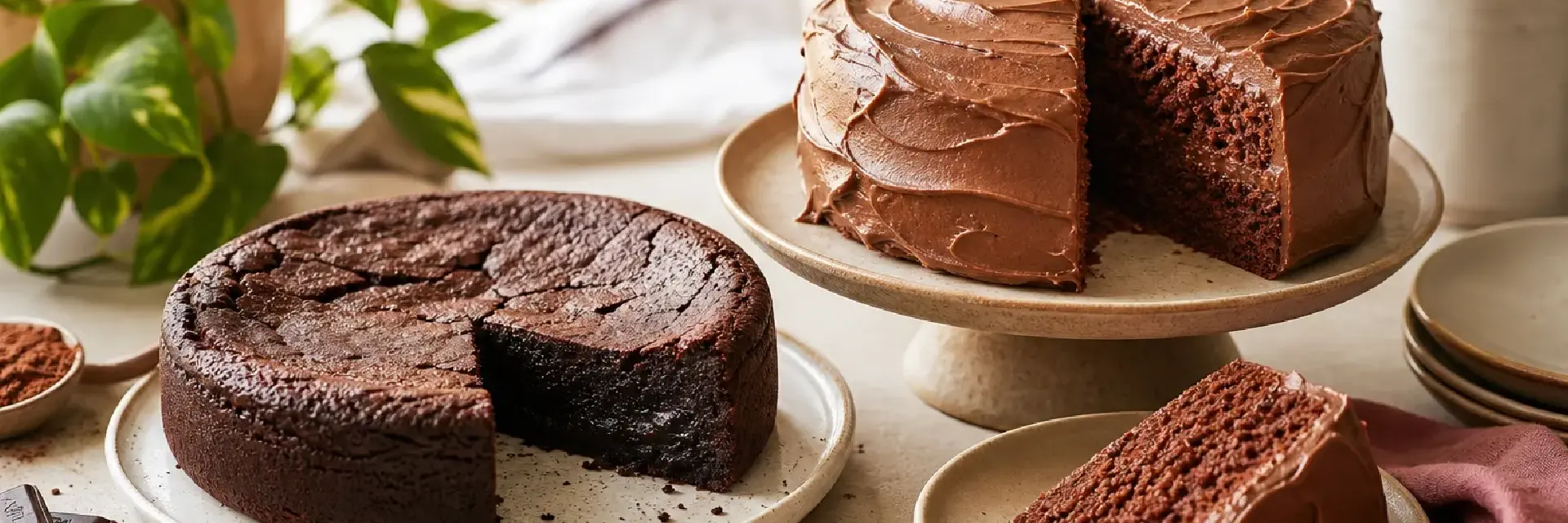
What is the difference between a mudcake and a regular chocolate cake?
At our counter in Trivandrum, this question comes up more than almost any other. It is a fair one. Both are dark, both are chocolatey, and from the outside of a display case they can look remarkably similar. But they are built on entirely different principles, and that difference matters when you are planning a birthday or a family gathering.
A mudcake and a chocolate sponge share almost nothing except their colour. They use different ingredients in different proportions, they are baked using opposite techniques, and they behave very differently once they reach the plate. Choose the wrong one for your occasion and you will notice it on the first slice.
At Bread Factory, our in-house mudcake is one of our most asked-about celebration cakes, and the first thing people want to know is how it compares to what they have had before. By the end of this article, you will know exactly what separates the two, which one suits your occasion, and how to store whichever one you choose.
What is the difference between mudcake and regular chocolate cake?
Mudcake starts with melted chocolate, not just cocoa
Most traditional mudcake recipes begin by melting real dark chocolate together with butter, creating a base that is dense, rich, and fat-forward before a single egg is cracked. This foundational choice is what sets mudcake apart from everything else in the chocolate cake family.
Using melted chocolate rather than only cocoa powder gives mudcake its signature deep, rounded flavour and tight, almost brownie-like crumb. The cocoa butter in the melted chocolate adds moisture and richness that cocoa powder alone cannot replicate. Many recipes also combine melted chocolate with a smaller quantity of cocoa powder, broadly in a ratio of two parts chocolate to one part cocoa, pushing the flavour further without making the batter too liquid.
A chocolate sponge relies on eggs and air, not fat
A regular chocolate sponge uses cocoa powder as its chocolate source and keeps fat relatively low. Its structure comes from beaten eggs, careful creaming, and a flour-to-fat ratio weighted toward flour rather than toward chocolate or butter. There is no melted chocolate in a classic sponge formula.
The result is a lighter batter that rises well in the oven and produces a soft, open crumb. Cocoa powder does the flavour work while eggs provide the lift. The core ingredient difference is straightforward: mudcake is built on fat and chocolate; sponge cake is built on eggs and aeration.
Texture and density: what “fudgy” actually means
The mudcake crumb and why it holds moisture so well
Mudcake has a very tight, compact crumb. When you cut into it, you get a dense, fudge-like interior that holds together cleanly without crumbling. It does not spring back the way a sponge does, and it does not fall apart when you slice it into portions for a crowd.
Because of its high fat content and the way moisture is sealed into the dense structure, mudcake retains softness for days. This is a real practical advantage for celebration cakes that need to be prepared a day ahead, transported to a venue, or served at the table after a long evening. The texture sits closer to a very sophisticated brownie than to what most people think of as cake.
How mudcake sits next to brownies and fudge cake
Brownies, fudge cakes, and mudcakes are often grouped together because they all sit on the denser end of the chocolate dessert spectrum. The practical differences come down to structure and fat distribution. A fudge cake is more cake-like than a mudcake: moist and dense, but with a lighter crumb and a cleaner rise.
A brownie is usually the richest and fudgiest of the three, with the highest fat-to-flour ratio, and is baked in a thinner layer. Mudcake sits between a fudge cake and a brownie in texture: denser than a fudge cake, but taller and more structurally stable than a brownie. It is the one you reach for when you want a dessert that commands attention at the table.
How the baking method shapes the final result
The low-and-slow approach that makes mudcake what it is
Mudcake is baked at a lower temperature, typically around 150 to 160 degrees Celsius, for a longer time, often 60 to 90 minutes depending on the size of the tin. This slower bake prevents the batter from over-aerating. The centre stays dense and moist while the exterior sets without drying out.
If you bake a mudcake too hot, you risk a dry, crumbly result that misses the point entirely. Patience is a real part of the recipe. The doneness test matters too: a skewer inserted into the centre should come out clean or with only a few moist crumbs, never with wet batter.
Higher heat, shorter bake for the chocolate sponge
A chocolate sponge is baked at around 180 to 190 degrees Celsius for a shorter time, which encourages the batter to rise quickly and the air pockets to set before the crumb can deflate. The higher heat gives the sponge its open, even crumb structure.
This is the opposite philosophy from mudcake: more lift, less density, and a lighter texture as the goal. The two techniques are not interchangeable, which is why you cannot use the same baking approach for both and expect similar results.
Which cake works better for a birthday or celebration
When mudcake is the right call
Mudcake is the better choice when you want a cake that holds up well, cuts cleanly into portions, and delivers richness that does not need heavy buttercream to carry the flavour. It is also the smarter choice when the cake needs to be made a day ahead, since mudcake actually tastes better after resting overnight. The flavours deepen, the crumb settles, and the whole thing becomes more cohesive.
For birthdays, anniversaries, and family gatherings in Trivandrum where the cake is the centrepiece, mudcake delivers a quality that a light sponge cannot replicate. At Bread Factory, our in-house mudcake is made to a recipe that prioritises real chocolate and proper butter, the kind of approach that lets the ingredients do the work rather than relying on shortcuts.
When a chocolate sponge makes more sense
A chocolate sponge is the better fit when you want a lighter dessert, when the gathering includes young children who may find mudcake too rich, or when you are layering the cake with fresh cream and fruit that needs a softer base. Sponges also handle fondant and fresh cream decoration more forgivingly because their lighter crumb is easier to work with.
Neither cake is universally better. The occasion and the preference of the person you are celebrating should drive the choice. A mudcake for a milestone birthday, a sponge for a lighter afternoon tea: both have their place.
Shelf life and storage: which one actually keeps longer
The mudcake advantage in freshness and staying power
Mudcake keeps well at room temperature for 3 to 7 days in an airtight container and up to a week in the refrigerator, with the exact range depending on the recipe and ambient conditions. Its high fat content acts as a natural moisture seal, which is why it often tastes better on day two than on day one. For families in Trivandrum who order or bake a day ahead of a party, this reliability is genuinely useful.
A chocolate sponge, by contrast, is best eaten within a day or two at room temperature. Its lighter crumb dries out faster, and refrigeration can make it feel firmer unless it is brought back to room temperature before serving. When advance planning matters, mudcake is the more forgiving option.
Storage practices that work for both
Cool the cake completely before covering it. Covering a warm cake traps steam and leads to a soggy surface that no amount of cream can fix. Use an airtight cake keeper or wrap the cake tightly in cling film. For any frosted or cream-filled cake, refrigeration is the safer choice regardless of the base.
When taking a refrigerated cake out, give it 30 to 60 minutes at room temperature before serving. Both mudcake and sponge taste noticeably better when the fat in them has had time to soften. A cold mudcake can feel almost too dense; a rested one is exactly right. Slice only what you need each time, and re-cover the exposed edges tightly to stop them from drying out.
The short answer, if you need one
To put it plainly: the difference between mudcake and regular chocolate cake comes down to fat, technique, and intention. Mudcake is dense, fat-forward, rich, and long-lasting. Chocolate sponge is light, airy, and best enjoyed fresh. The choice between them depends on what you want from your cake, staying power and richness, or lightness and freshness.
If you are looking for a celebration mudcake in Trivandrum that is baked in-house and built without shortcuts, Bread Factory’s mudcake is worth experiencing. It is the kind of cake that earns its place at the table, not just because it looks good, but because every slice delivers exactly what it promises.
Order fresh from Bread Factory
Have everything Bread Factory makes delivered directly to your doorstep. Browse our full range of freshly baked celebration cakes, brownies, dessert cuts, pastries, and daily bakes through the Bread Factory app. You can also visit any of our outlets across Trivandrum, including Vazhuthacaud, Kowdiar, Sreekaryam, Nalanchira, Overbridge, Medical College Road, and Kumarapuram.
Download for Android:Google Play Store
Download for iOS:Apple App Store