
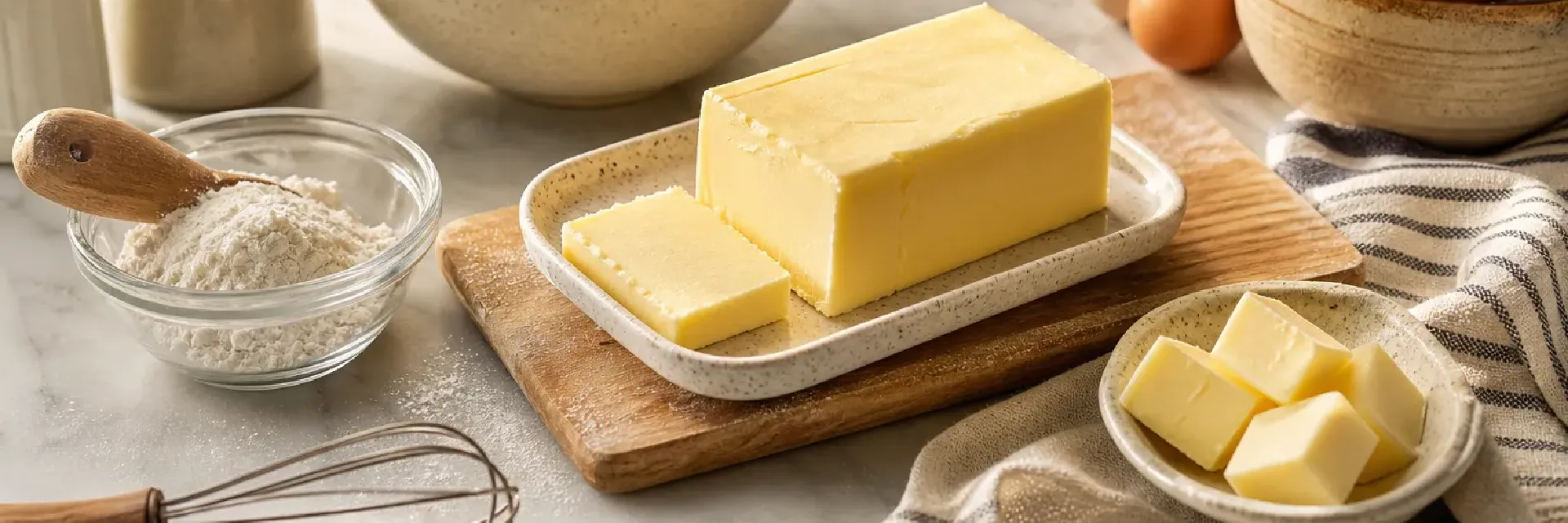
Anyone who has grown up in Trivandrum knows the feeling. You walk into a bakery and the smell reaches you before the counter does. There is a particular warmth to it, something round and rich that you cannot quite name but immediately recognise. Most Kerala families understand instinctively why use real butter in baking produces that deeper colour and noticeably different crumb. The aftertaste lingers in a way that oil or margarine never quite manages.
So what exactly is happening when butter goes into a bake? Why does it produce results that feel so noticeably different from everything else?
At Bread Factory in Trivandrum, the decision to bake with real butter has never been about following a trend. It was made because Thoughtful Baking means choosing the better ingredient at every step, starting from the very beginning. This article covers what real butter actually does inside a bake, how it compares with margarine, how to handle it correctly at home, and when a swap genuinely makes sense.
Why use real butter in baking: science, flavour and technique
Fat, flavour and tenderness working together
Real butter is roughly 80 to 82% fat. During mixing, that fat coats the flour proteins and limits gluten development, which is what gives butter-based bakes their characteristic softness and tender crumb. Margarine can approximate this to some degree, but butter’s natural dairy fat carries flavour compounds that vegetable-based fats simply do not have. The richness in a good butter biscuit or a soft butter cake is not a coincidence. It is a direct result of what the fat is made from.
The flavour difference is real and it is noticeable. Dairy fat contains a complex mix of aromatic compounds that develop beautifully when heated. No vegetable oil or margarine replicates this fully, however well formulated it may be. This is why bakers who work with real butter notice immediately when they have to switch, and why the people eating those bakes notice too.
The role of milk solids and moisture in browning
Butter also contains about 16% water and a small percentage of milk solids. Those milk solids are responsible for the golden-brown colour and deeper, slightly nutty flavour that develop during baking. This is why butter-based baked goods brown more beautifully and evenly than those made with oil or margarine. The surface colour you see on a well-baked pastry or a butter biscotti is not just heat; it is the milk solids at work.
The water in butter also contributes moisture to the dough or batter and helps the final texture settle correctly. It is not just fat doing the work. It is the full composition of butter, fat, water, and milk solids working as one, that makes it so difficult to replicate with any single-ingredient substitute.
How butter builds rise and layers: creaming and lamination
Creaming butter with sugar for rise and a finer crumb
When softened butter is beaten with sugar, the sugar crystals cut tiny air pockets into the fat. Those pockets expand in the oven and give the bake mechanical lift, working alongside whatever chemical leaveners the recipe calls for. This is why cakes made with properly creamed butter have a lighter, finer crumb than cakes made with oil. Oil cannot trap air the same way because it is liquid at mixing temperature and has no solid structure to hold bubbles in place.
Margarine can cream, but it holds those air pockets less reliably than real butter. The result is usually a slightly denser crumb and less lift. For a simple muffin, this may not matter greatly. For a celebration cake where texture and structure matter, the difference is clear to anyone who tastes both.
Cold butter and the secret to flaky pastry layers
In laminated doughs like puff pastry, the rules change completely. Butter must stay firm and cold throughout preparation. As the dough bakes, the water inside the butter turns to steam, and that steam forces the layers apart, creating the lift and flakiness that makes a good pastry worth eating. This is the science behind something that looks effortless on the outside.
If the butter is too warm, it blends into the dough instead of staying in distinct layers. If it is replaced with a soft spread, the layers collapse entirely. The result is flat, greasy, and texturally wrong. Laminated pastry is one baking application where there is simply no workable substitute for cold, firm, real butter. The steam cannot come from something that has already melted into the dough.
Butter vs margarine: what actually changes in the bake
Fat content, water content and how they affect the final result
Stick margarine with around 80% fat can substitute butter in many recipes at a one-to-one ratio. The closer the fat content is to butter, the more reliably it behaves in the oven. Tub or soft spreads are more problematic: they contain more water and less fat, which makes baked goods softer, sometimes wet, and difficult to brown evenly.
Butter’s fat behaves consistently and predictably in the oven. That consistency is what a bakery depends on when it is baking for hundreds of customers every single day, and it is what home bakers need when they want reliable results from a recipe they have invested time and ingredients into.
What margarine does to flavour, spread and texture
The clearest difference between butter and margarine is flavour. Butter has a natural dairy richness that margarine, however well made, does not fully replicate. Cookies baked with margarine often spread more and have a softer, slightly oilier finish. Cakes may feel denser or less structured than their butter-based equivalents.
In recipes where fat is the central flavour, shortbread, biscotti, or buttery pastries, these differences are not subtle. For everyday sponge cakes or simple muffins, the gap is smaller and many find it acceptable. But for baked goods where butter is meant to be tasted and not just used as a binder, real butter is the only honest choice.
Handling butter right: temperature changes everything
Getting butter to the right temperature for cakes and cookies
For creaming in cakes and cookies, butter should be softened to around 16 to 18 degrees Celsius. It should hold its shape, dent easily under a thumb, and feel cool to the touch, not shiny or greasy. In Trivandrum’s warm, humid climate, this is the trickiest part of working with butter at home. If butter is too warm, it will not hold air during creaming and the batter will turn loose.
If this happens, do not discard the mixture. Refrigerate the bowl for 10 to 15 minutes and try again. For cookie dough that feels too soft after mixing, chilling it for 30 minutes before baking is one of the most reliable ways to control spread and get cleaner, more structured results. Kerala’s humidity makes this step especially worthwhile.
Keeping butter cold for pastry work
For puff pastry or any laminated preparation, butter must stay firm throughout. The goal is a block of butter that is pliable enough to roll without cracking but cold enough that it maintains distinct layers inside the dough. As soon as the butter begins to soften and look shiny, the dough needs to return to the refrigerator.
This discipline is what separates a properly layered pastry from a flat, greasy one. It takes patience, but when you bite into a pastry that has been made this way, the result makes the effort obvious.
For shortbread, biscotti, or butter-heavy pastries, stick to real butter wherever possible. The character of those bakes depends on butter’s full composition, and no stick margarine fully captures it. This is not snobbery. It is simply what the recipe needs to deliver.
Swapping butter with oil: when it works and when it does not
Oil works well in cakes, muffins, quick breads, and brownies where a moist, tender crumb is the goal and aeration comes from eggs or chemical leaveners rather than the fat itself. Use roughly 75% of the butter amount by volume when substituting with a neutral oil. The result is often slightly moister and denser, which suits these baked goods well.
Oil does not work in laminated pastry, shortbread, or biscotti. It cannot be creamed, cannot trap air, and cannot produce flaky layers. In those applications, oil always produces flat, texturally wrong results. This is not a matter of preference; it is a matter of how the fat functions in each specific technique.
Why Bread Factory bakes with real butter, every single day
Thoughtful baking starts with the ingredient you choose
At Bread Factory, using real butter in every biscotti, every bread, and every pastry is a baking decision, not a marketing one. The team has seen clearly, over years of daily baking across the Nalanchira, Vazhuthacaud, Kumarapuram, and Kowdiar outlets, what real butter produces and what margarine or vegetable oil cannot. When the base ingredient is right, everything built on top of it is better.
Choosing the better ingredient every time, even when the easier or cheaper option is available, is what Thoughtful Baking means in practice. It is a quiet commitment that shows up in the taste of everything Bread Factory puts on the shelf.
What this means for what you taste at Bread Factory
Every butter biscotti, every puff pastry, and every butter-enriched bread at Bread Factory carries the flavour, tenderness, and texture that only real butter can produce. No margarine, no shortcuts, no artificial flavours filling in the gap that a lesser ingredient would leave behind.
When you pick up a biscotti from one of the Trivandrum outlets or order fresh pastries through the Bread Factory app, you are tasting what honest baking with clean ingredients actually delivers. That is the standard the bakery holds to, every single day, without exception.
Why use real butter in baking: it is worth the care
Real butter is not an indulgence in baking. It is the ingredient that does the most structural and flavourful work, from creating tender crumbs and golden crusts to building flaky pastry layers and carrying the richness that makes a bake worth eating. Understanding why use real butter in baking, and what it does at each stage, helps you make better decisions at home, and helps you recognise when something has been made with genuine care rather than shortcuts.
At Bread Factory, that care is baked in from the start. It begins with the butter, and it shows in everything that comes out of the oven.
Have everything Bread Factory sells delivered directly to your doorstep.
Download our app to browse our full range of clean, freshly baked goodness.
Download for Android on Google Play
Download for iOS on the Apple Store