
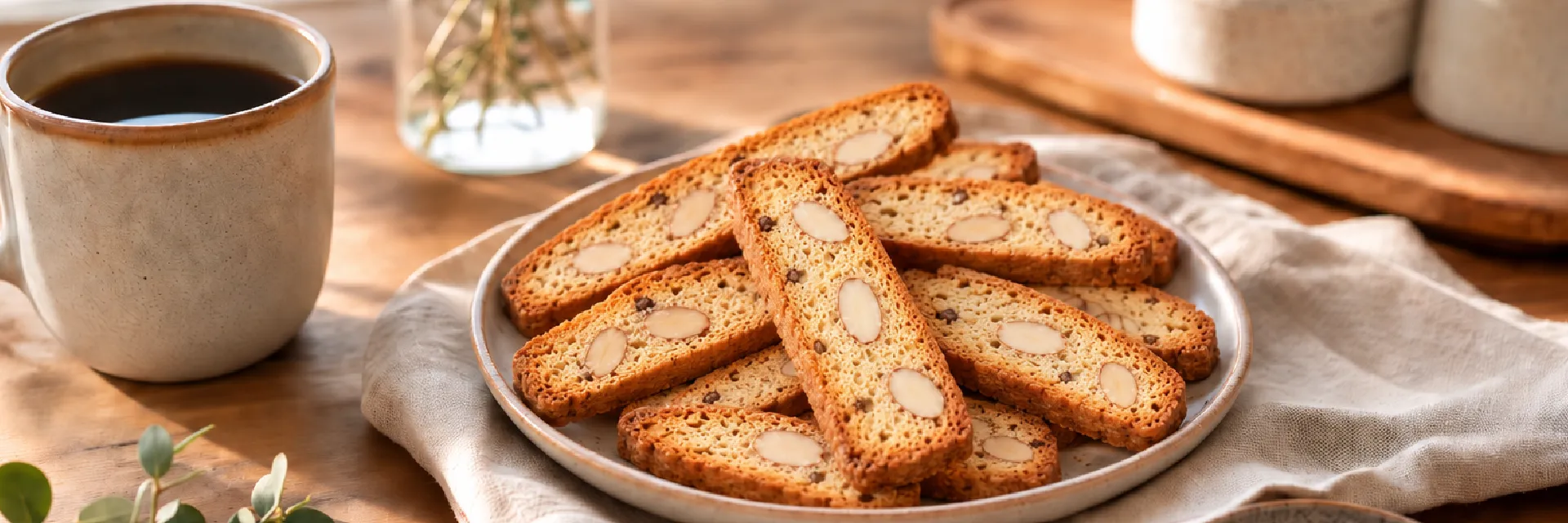
There is a particular comfort to the evening chai ritual in Trivandrum. The kettle goes on, someone pulls out a tin or a packet, and whatever is inside gets passed around without much ceremony. Biscotti has quietly earned a place in that routine, sitting alongside the cup, neither too sweet nor too filling. It shows up on school snack trays, inside gifting boxes during the festive season, and on the tables of office break rooms across the city.
But here is the honest question many ask: is biscotti made with butter better than store-bought? Both carry the same name. Both look roughly similar. The difference, though, is real, and it starts long before the first bite.
At Bread Factory, this is a question we have been sitting with for a while. We make our biscotti in-house at our Trivandrum bakeries, using real butter, no shortcuts, and no preservatives. This piece is not about dismissing packaged biscotti outright. It is about helping you understand what you are actually reaching for when you open that tin.
What real butter does to biscotti
How butter changes the flavour from the inside
Butter carries flavour in a way that neutral fats simply do not. It brings a gentle dairy richness and a subtle natural sweetness that rounds out every bite. During baking, it develops slightly caramelised, nutty notes that add depth without being loud. Oil-based biscotti can taste clean and light, but beside a buttered version, they often read as flat.
This is not about being indulgent for the sake of it. It is about what the fat actually does to the final flavour. When you add almonds, cranberries, or pistachios to a buttered dough, those mix-ins shine through because the butter carries flavour rather than muting it. The result is a biscotti that tastes like something, not just a crunchy backdrop to your chai.
Tender crumble versus hard crunch: what the fat decides
Traditional Italian cantucci, the original version from Tuscany, are made with no fat at all. Just flour, sugar, eggs, and almonds. The result is very dry, very hard, and designed to be dipped in wine. That is the classic, and it is not for everyone.
Butter moves biscotti toward a more approachable texture. It softens the crumb structure slightly, giving the biscotti a finer, more pleasant snap rather than a jaw-testing crunch. Still crisp. Still proper biscotti. But kinder to eat, which is exactly what most Kerala tea-time biscotti lovers tend to prefer. It is the version that works with a cup of cardamom chai and does not require a soak to be enjoyable.
What actually goes into store-bought biscotti
Reading the label: fat choices and shelf-life ingredients
Pick up a packet of store-bought biscotti and turn it over. Many commercially produced versions use palm oil, shortening, or margarine in place of butter. Some include emulsifiers such as sodium stearoyl lactylate or soy lecithin, which improve texture consistency and slow staling over a long shelf life. These are not inherently dangerous ingredients, but they do affect the final flavour.
A biscotti made with palm oil will taste noticeably different from one made with dairy butter. The richness is simply not there. The mix-ins, whether almond or fruit, do not come through as clearly. Packaged biscotti sold in Indian supermarkets may also contain preservatives such as potassium sorbate or BHA to prevent rancidity in the fats used. Again, not alarming, but worth knowing before you reach for it without thinking.
How packaged biscotti achieves its long shelf life
Biscotti’s double-baked, low-moisture structure does a lot of the shelf-life work naturally. The hard texture and very low water content slow spoilage considerably, which is why an unopened packet can sit on your shelf for months without going off. Sugar content and tight packaging do the rest.
The bigger issue is not safety, it is flavour freshness. Even when a packaged biscotti is technically still within its best-before date, the fats inside may have oxidised slowly over time. The product is safe, but it tastes duller. Once the packet is opened, most commercial biscotti are best within a week before the crunch starts to soften and the flavour falls flat.
Is biscotti made with butter better than store-bought? Taste, texture, and freshness compared
Where the flavour gap is most obvious
The difference shows up most clearly on the first bite. A butter biscotti has warmth. There is a subtle sweetness from the fat itself, and the mix-ins, whether classic almond or cranberry pistachio, come through with genuine character. A palm-oil or margarine version can taste neutral, sometimes slightly waxy, especially at room temperature.
Every customer who has tried both tends to say the same thing: homemade or small-batch butter biscotti scores higher on flavour because the ingredients actually express themselves. Store-bought versions are often described as overly sweet, flat, or slightly stale-feeling even when fresh. Once you know what to look for, the gap is not subtle.
Shelf life versus flavour freshness: is biscotti made with butter better than store-bought long-term?
A packaged biscotti can last six months unopened. A fresh butter biscotti, stored in an airtight tin, will last two to three weeks. On paper, the packaged version wins on longevity. But shelf life and flavour freshness are not the same thing.
A fresh biscotti at day one tastes completely different from the same recipe at week six. The butter flavour holds well in the early weeks, the snap is clean, and the mix-ins taste like what they are. A packaged version that has been sitting since it was manufactured does not offer the same experience, regardless of what the label says. The trade-off is honest: convenience and longevity on one side, genuine taste and freshness on the other.
How Bread Factory makes biscotti differently
Baked in-house, with no shortcuts
We bake our biscotti fresh in-house at our Trivandrum bakeries. Real butter goes into every batch. Not margarine, not vegetable shortening. No preservatives, no artificial additives. The double-bake is done carefully and not rushed, so the texture is consistent every time.
For families in Trivandrum who want a clean, honest biscotti to serve with evening chai, pack into a school bag, or include in a gifting box, that commitment matters. You should not have to read a label twice before feeling comfortable offering something to your family. A Bread Factory biscotti is the kind of thing you can serve at home without hesitation, which is the standard we hold every batch to.
A straightforward local alternative
Most people in Kerala reach for packaged biscotti or biscuts because it is familiar and easy. Bread Factory offers a local Trivandrum alternative that does not ask you to choose between convenience and quality. Fresh, clean, and made with real butter, it is available across our outlets in Nalanchira, Vazhuthacaud, Kumarapuram, and Kowdiar. Simply a better biscotti for everyday life in this city.
We are not a premium artisan café asking you to pay a steep price for something ordinary dressed up in craft paper. We are a neighbourhood bakery that has been making things the right way for decades, and biscotti is no exception.
Tips for baking butter biscotti at home
Starting with the right fat and getting the dough right
If you want to try making butter biscotti at home, the fat choice is everything. Use real butter, not margarine. Margarine will give you a similar structure but a noticeably different taste, and that difference is the whole point of making it yourself. Cold butter cut into the dough gives a crumblier, more delicate texture. Room-temperature butter creamed with sugar produces a slightly airier result. Both work; it depends on the texture you prefer.
Do not over-mix the dough once the flour goes in. Overworking it develops too much gluten and makes the final biscotti tough rather than pleasantly crisp. Mix until just combined, shape your logs, and let the oven do the rest.
The double-bake method and what to watch for
The first bake sets the loaf. Slice it diagonally while still slightly warm, then return the slices to the oven for the second bake, which dries them out and creates the characteristic crunch. The second bake is where most home bakers go wrong. Too long and the biscotti become chalky and harsh. Too short and the centre stays soft.
A moderate oven temperature and a watchful eye will give you the clean snap that makes a good butter biscotti worth the effort. Once cooled completely, store them in an airtight tin. They will keep well for two to three weeks and taste genuinely good throughout, because the butter gives the flavour somewhere to go.
The honest answer
Is biscotti made with butter better than store-bought? On flavour and freshness, yes. The butter gives the biscotti warmth, depth, and a more pleasant texture that a palm-oil or margarine version simply cannot replicate. Store-bought wins on convenience and shelf life, and that is a real advantage if you need something that lasts months in the pantry.
But for Trivandrum families who want a biscotti worth reaching for at tea time, one you are happy to serve to guests or tuck into a child’s school bag, the butter-made version is the better experience. Whether you bake it at home or pick it up fresh from Bread Factory, the difference is in the ingredients, and ingredients are where it always begins.
Have everything Bread Factory sells delivered directly to your doorstep. Download the Bread Factory app to browse our full baked range, including our in-house biscotti made with real butter and no preservatives. Available on Android via Google Play and on iOS via the Apple App Store.