
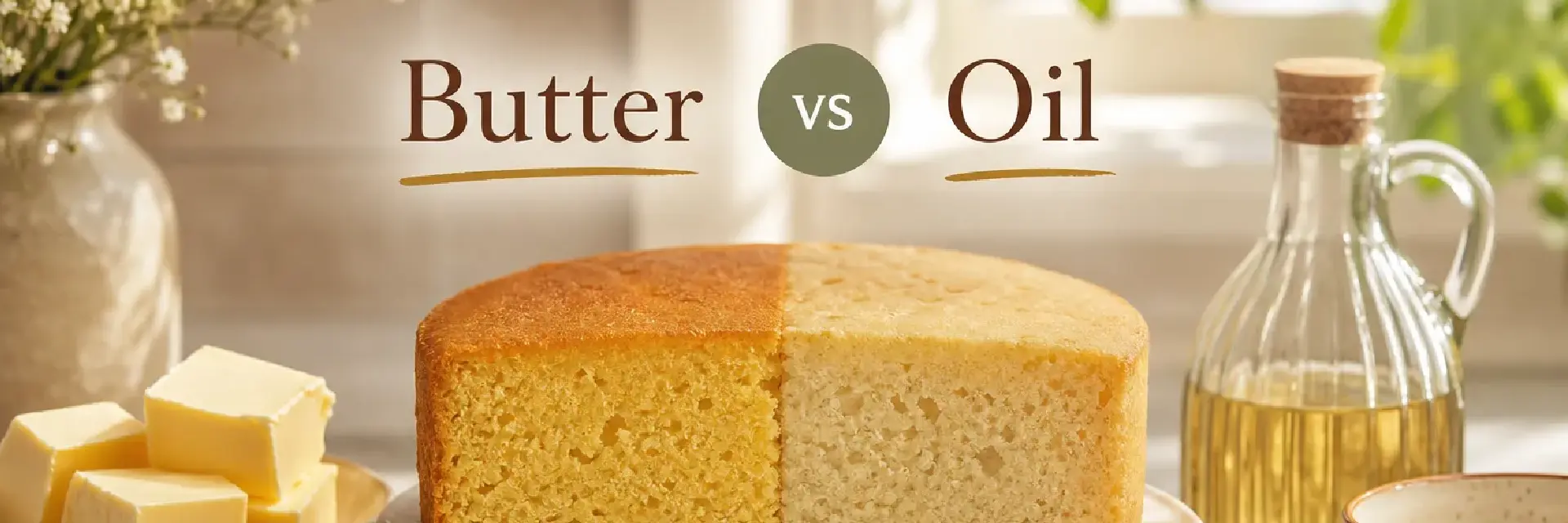
You pull out a cake recipe on a Saturday morning and it calls for 100 grams of softened butter. The tin of sunflower oil is sitting right there on the counter, and the swap seems harmless enough. It is not a small decision, though. When it comes to butter vs oil in cake baking, the two fats behave very differently in a batter, and the result on your plate reflects that choice from the very first step.
This guide covers what each fat actually does to texture, flavour, and moisture, which cakes suit butter and which suit oil, how to convert between them correctly, and which oils are worth keeping in a Kerala kitchen.
Butter vs oil in cake baking: texture, flavour and what really changes
The creaming method and the rise it creates
When you cream softened butter with sugar, something mechanical happens before the batter even enters the oven. The sharp edges of sugar crystals cut into the butter and trap tiny air bubbles inside the fat. These bubbles expand with heat, lifting the cake and producing a finer, more even crumb structure. This is why the creaming step matters and cannot be rushed. Aim to cream until the mixture is pale, noticeably increased in volume, and ribbon-like in texture, this typically takes three to five minutes with a hand mixer at medium speed, depending on quantity. That extra effort makes a visible difference in the final rise.
How butter shapes flavour and browning
Butter contains milk solids that drive richer browning and a deeper baked flavour, especially at the crust. This is why a plain vanilla pound cake made with butter tastes distinctly different from the same recipe made with oil, even if the sponginess looks similar when you slice it. The flavour comes not just from the butter itself, but from what those milk solids do under oven heat.
Why butter cakes can feel drier by day two
Butter solidifies as it cools, and its water content evaporates during baking. Butter cakes tend to firm up quickly after the first day, sometimes noticeably so by the next morning, and are best eaten fresh or within one to two days. If you are planning a cake that needs to sit for a few days before it is eaten, this is worth factoring in before you begin.
Butter vs oil in cake baking: moisture, softness and shelf life
Why oil keeps cakes soft for longer
Oil is a liquid fat at room temperature, which means it stays fluid even after the cake cools completely. It coats flour particles more thoroughly than butter does, slowing staling and keeping the crumb softer and more moist. In Kerala’s climate, where humidity can swing unpredictably, this property makes oil-based cakes considerably more forgiving. A chocolate cake baked with oil on Friday will still taste good on Sunday, which matters when you are baking for a family gathering or a birthday spread.
The trade-off: less structure, less flavour
Because oil cannot be creamed, oil-based batters start with very little trapped air. The cake relies more on chemical leaveners like baking powder and baking soda, and on eggs, for its volume. The crumb is often tender and moist, but it can feel slightly coarser or denser compared to a properly creamed butter cake. Oil adds no flavour of its own when you use a neutral variety, so the taste of the cake depends entirely on vanilla, cocoa, spices, or whatever else carries the recipe.
Which fat suits which type of cake
Cakes where butter is the right choice
Pound cakes, Victoria sponge, shortbread, financiers, and most layered celebration cakes benefit from butter’s structure, flavour, and fine crumb. Any cake where you want a clean, rich taste and a light, airy rise is a cake where butter is doing necessary work, not just adding calories. This holds true for cookies and tart shells too, where the solid fat is entirely responsible for the final texture.
Cakes where oil genuinely works better
Carrot cake, banana cake, chocolate mud cake, chiffon cake, and any recipe with strong spices or wet ingredients like yoghurt or buttermilk actually perform better with oil. The extra moisture from oil balances the density of grated vegetables or the bitterness of cocoa, and it keeps the cake soft even after it has been stored. For a chocolate cake meant to be eaten over two to three days, a birthday cake, for instance, oil is often the more practical and reliable choice for home bakers in Trivandrum.
How to swap butter for oil in cake baking (and get the conversion right)
The substitution ratio to follow
The reliable starting point is this: use 3/4 cup of oil for every 1 cup of butter the recipe calls for. This accounts for the fact that butter is only about 80% fat (the remainder being water and milk solids), while oil is 100% fat. For a quick back-of-the-envelope rule, many bakers use a 1:1 ratio by volume, the same amount, and adjust from there if the batter seems too wet or too thick. The 3/4 ratio is more precise; the 1:1 swap is easier to calculate in a hurry. Both work, depending on how exacting you want to be.
Liquid and method adjustments to make
Because butter contains roughly 20% water, swapping it for oil removes that moisture from the batter. Start by checking consistency: if the batter looks too thick after the switch, add a tablespoon or two of milk or water to loosen it. If the recipe already carries a lot of liquid (milk, water, or buttermilk), you may not need to add anything at all. Skip the creaming step entirely; instead, whisk oil with eggs and sugar, then fold in your dry ingredients. Keep the oven temperature the same, but check the cake five minutes earlier than the recipe states, because oil-based batters can set and brown differently at the edges and top. Expect the result to taste milder and feel moister than the butter version, so consider increasing your vanilla or spice quantities slightly to compensate.
Best oils for cake baking in Indian kitchens
Neutral oils that work for most cakes
Sunflower oil is the most reliable all-purpose baking oil: neutral in taste, high in smoke point, and widely available across Kerala. It does not compete with the cake’s own flavours, which is exactly what you want when baking a plain vanilla sponge or a chocolate layer cake. Rice bran oil is a strong option too, light, mild in flavour, and particularly good for cakes where you want a soft crumb without any oily aftertaste. Refined groundnut oil works well if sunflower is unavailable and adds only a barely detectable background note that disappears in spiced or chocolate cakes.
To put it simply:
- Sunflower oil, best all-purpose choice for most cake recipes
- Rice bran oil, light and mild; excellent for a soft, moist crumb
- Refined groundnut oil, a practical backup; works well in spiced and chocolate cakes
- Vegetable oil (neutral liquid blend), the classic default; keeps cakes soft without interfering with flavour
When coconut oil makes sense (and when it does not)
Coconut oil works well in cakes built around warm spices, chocolate, or tropical flavours. In a plain vanilla or sponge cake, however, it adds a noticeable coconut aroma that can pull the flavour in an unintended direction. Virgin coconut oil is quite pronounced; refined coconut oil is considerably milder and closer to neutral. Coconut oil also solidifies at cooler temperatures, which can alter the crumb texture unexpectedly. Use it deliberately for recipes where the flavour is a good fit, not as a default replacement for sunflower oil.
Okay. So what about mudcake specifically?
For chocolate mud cake specifically, saying that “oil is better” is too broad. A classic mud cake is usually at its best with butter.
A traditional mud cake is meant to be:
- Dense rather than airy
- Rich and deeply chocolatey
- Fudgy but firm enough to slice cleanly
- Moist without feeling oily
Because the batter usually uses melted butter, not creamed butter, the main advantage of butter here is not aeration. It is flavour, richness and firmness after cooling. Butter also helps a mud cake become dense and truffle-like when chilled.
Butter-only mud cake usually gives:
- Richer, more luxurious flavour
- A firmer, denser crumb
- Cleaner slices
- Better stability for layering, ganache, fondant or cake carving
Where as, Oil-only mud cake usually gives:
- A softer and more consistently moist crumb
- Better softness after refrigeration
- Longer-lasting tenderness
So if you want a mudcake that is absolutely rich, then it’s always butter. Real butter.
The right fat, chosen deliberately
The simple rule holds up well: choose butter for flavour, structure, and celebration cakes that need a light, fine crumb. Choose oil for everyday cakes, moist chocolate bakes, and anything that needs to stay soft over a day or two. For the conversion, start with 3/4 cup of oil for every 1 cup of butter, or use a 1:1 swap as a quick starting point and adjust from there. Check batter consistency before adding extra liquid, and check the cake five minutes early.
Ultimately, the choice between butter vs oil in cake baking comes down to what you want the cake to be: flavourful and fine-textured, or moist and long-lasting. The best bakers are not rigid about ingredients, they are deliberate. Knowing why a fat is in a recipe is what lets you swap it confidently, with a clear sense of what you are trading and what you are gaining. That thinking shapes every recipe at Bread Factory, where each fat is chosen for a reason rather than out of habit or cost-cutting.
If you are in Trivandrum and want to taste that difference without the baking, Bread Factory delivers freshly made goods straight to your door. Download the app and see what a thoughtful recipe really tastes like.
Download on Google Play (Android)
Download on the Apple App Store (iOS)